Showing posts with label grief. Show all posts

June 11, 2020

Inspired and motivated and random thoughts

Today I feel inspired and motivated. I've been reading and resting and hanging out with my niece who came to visit. But today, I woke up ready to write a real chapter of my book. No time to waste, need to get these words out of my head and onto the screen.

I have joined a few communities recently, including the writing group which I know I have mentioned. I've made some really amazing cancer friends (online, of course *thanks quarantine*). I've been learning from my co-conspirators in this terrible club we are all members of, and I've been able to take better care of my mental health this way. Before, I thought I was too fragile and too afraid to have cancer friends. But even with all the different stages and types of cancer, we are all sharing valuable experiences, even if they are often incredibly unpleasant.

Let's talk mental health. From the beginning, I knew I would need help. If you have a cold, you take Dayquil, right? There's no shame in taking some medicine to stop the flow of boogies and constant sneezing. You might even pop some extra vitamin C to hopefully prevent the flu or some sinus infection from taking you out. I know enough about myself to know that I am predisposed to depression and anxiety, so from the beginning, I knew I would need chemical help to make it through all of this. I'm not ashamed to say that I am on anti-depressants and anti-anxiety pills and even birth control pills to keep my brain chemistry and hormones evened out and relatively balanced.

So when this all started, I got into regular talk therapy and also tried music therapy. Neither of these was quite the right fit for me. That doesn't mean that therapy doesn't work, but for me, I needed something different.

The wild thing that I truly never expected was my cancer writing group to be more beneficial for my overall mental health and stability than so-called real therapy would be. I've always been a reader, and I've always written when my feelings overwhelmed me; somehow I never realized the connection between the emotion and the release/acceptance of how I was feeling.

Anyway, if you just wanted a regular cancer update: still have it, chemo sucks, blah. Good times.

May 19, 2020

Fave Quote of the Book: Small Victories by Anne Lamott (Part 2)

From Amazon:

So, where did we leave off? (LINK)

Was I saying that I came from an unhappy family?

What does it mean to have a happy family?

Who knew that I'd be exploring such difficult questions in a silly little blog that is supposed to be about non-cancer. Yet, here we are.

My family is special. I remember a childhood of laughter, silliness, bad jokes, talking lobsters, and spontaneous trips to unexpected locales.

I also remember a childhood with tears, fear, hurt and misunderstanding, and being misunderstood. As a shy introvert from an exceptionally loud family of extroverts, I spent too much time with my own thoughts, wishing I fit in better. I had feelings I didn't understand, couldn't put words to, and as an early reader who read "at the college level" by the time I was 11, it was unusual to be unable to find the words I needed.

We fought (and still fight). We cried (and still cry). We try to understand each other, even though it often feels like we all came from different planets. Are all families like that? I honestly don't know.

We had love, but we also had an unfair share of unhappiness. Well, I call it unfair, but I don't know if that is true either.

We have hard conversations, hard feelings, and hard hearts, and all the wishing in the world can't undo some of the terrible things we've done, or unsay the terrible things we've said. Lamott says,
"Forgiving people doesn’t necessarily mean you want to meet them for lunch. It means you try to undo the Velcro hook. Lewis Smedes said it best: “To forgive is to set a prisoner free and discover that the prisoner was you.” (Lamott 117).
As family, we should always be prepared to forgive, because we are family, right? Even the Bible says we should turn the other cheek, so forgiveness is the word of the day, yes?

Maybe.

For me, explicit forgiveness is not free. Again we come back to the idea of grace. I am not full of grace, I might be full of something, but grace ain't it. Forgiveness comes at the cost of acknowledging the wrong, committing to never repeat it, and apologizing. An apology involves the words "I am sorry" or "I apologize for the hurt I caused to you."

A non-pology might include the words "I'm sorry if..." or "I'm sorry but..."

"I'm sorry if I hurt your feelings" is NOT an apology. "I'm sorry but I didn't mean it that way" is NOT an apology. I'm sorry for anything that I might have done" is not an apology. It is so difficult to find grace when trust is broken. Trust might be healed if the apology includes a commitment to not repeat the transgression. Trust might be healed if the transgressor takes some action toward healing. Trust might be healed by respecting boundaries.

I am no expert on grace, but I have so many expectations. I love the idea of grace, of love undeserved and without conditions. I want to learn that grace.

My therapist tried to teach me about giving myself grace. Do you want to know what is even harder? Giving grace to others. But as Smedes above said, forgiveness sets us free. Perhaps that is the grace that I am looking for. That doesn't mean that my heart is left open to be trampled by any and all who wish to stomp on it. The doesn't mean that I have no hurts left, because I do. But in my quest for giving myself grace, I have to try to let go of those hurts and move forward. Unconditional love is not the same as unconditional trust, but maybe we can learn to get closer to that, no matter how far away that grace might seem.

Read this book. It is by far one of the best I've stumbled across in a while.

April 21, 2020

Original poem: Ode to Langston Hughes


Harlem - By Langston Hughes
What happens to a dream deferred?
      Does it dry up
      like a raisin in the sun?
      Or fester like a sore—
      And then run?
      Does it stink like rotten meat?
      Or crust and sugar over—
      like a syrupy sweet?

      Maybe it just sags
      like a heavy load.

      Or does it explode?


My poem:
Ode to Langston Hughes’ “Harlem”
I have a dream
I’m sorry, chemo brain gave me the wrong black history guy
I want to scream

The weight of his words
Falling from the sky
Flittering like birds

Ideas stuck inside of me
My brain is running dry
Can cancer make you not love me?

We carry this shared weight
You and me, and we, and I
Hope seems like cruel bait

The future is a trap
Time just keeps going by
There’s only so much around which my mind can wrap

Langston Hughes infects my memories
Of literature classes gone by
Will my students remember me?

Langston Hughes knew what to do with the words
With the right words, we can fly
I have a dream of being a bird
-         25 March 2020

April 8, 2020

Identity crisis: Who even am I?

Guess what.

I'm back!

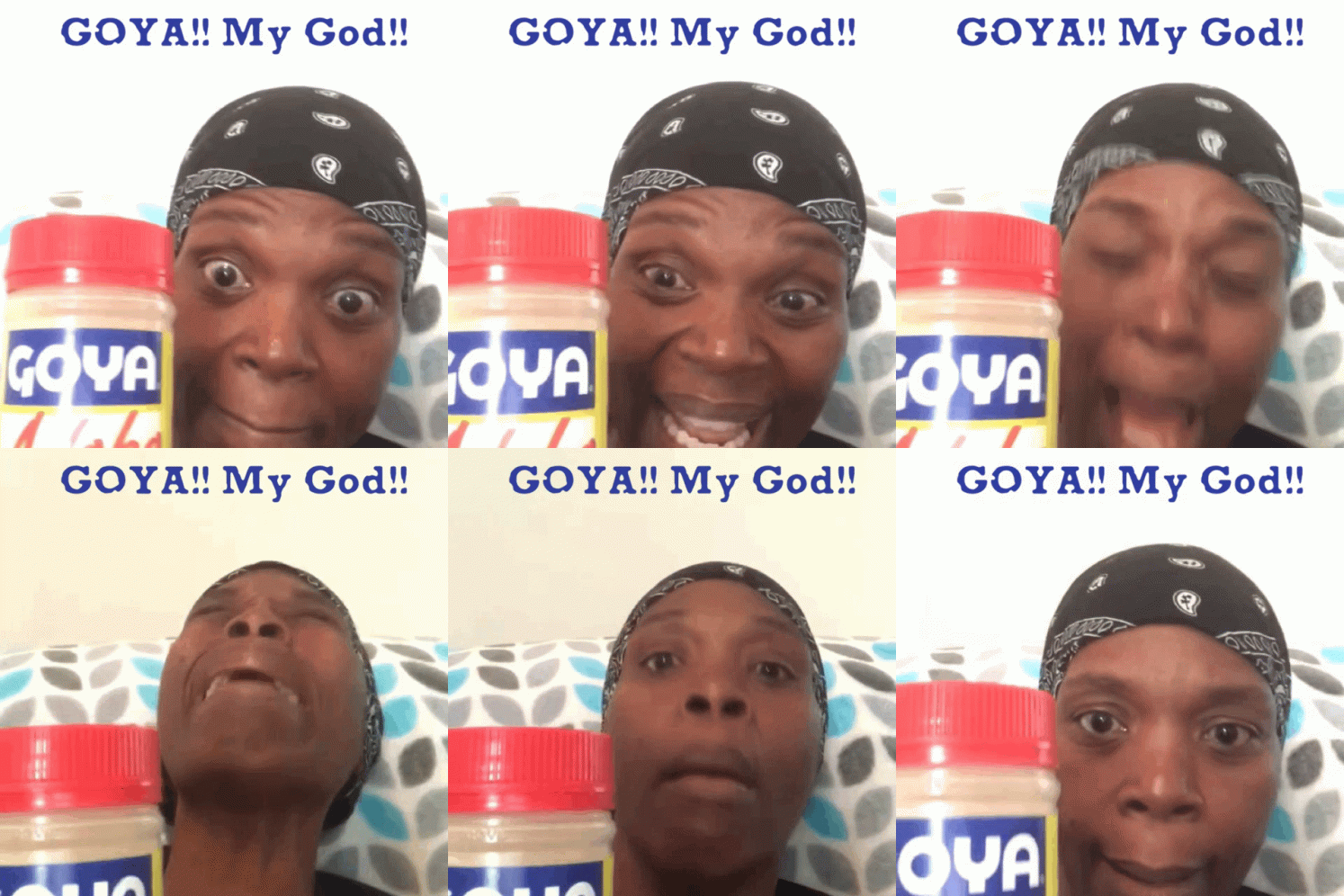
I want to tell you a story about my identity crisis that I had last night that almost broke me. For those of you who don't know, I am Puerto Rican and Dominican, a mix that is quite rare in the area in which I live. Most of the few Hispanic people in my area are Mexican, which means that dialect and food are different enough that I just don't quite fit in. My local grocery store stopped selling anything Goya (the food of my people) a few years ago; the next closest grocery store only occasionally has the Goya goodness that I need.


Now, I am not what you might call a *good* Latina. I am woefully out of practice with my Spanish, which I understand but barely speak anymore. I only rarely cook Hispanic food, and when I do, I have to call my sister to remind me of the recipes that families never write down.

I do, however, use the seasoning of my people, although it is getting harder and harder to find on a local level
  
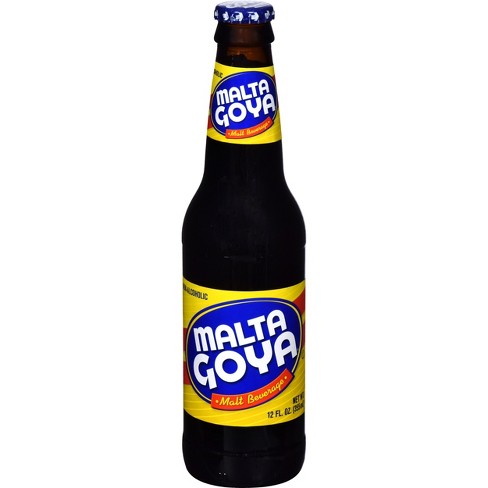
Anyway, I tell you all of this, because there is one special beverage from my childhood that holds a place near and very dear to my heart. The single only people I've met who like this stuff are either related to me, or of similar descent.

Ladies and gentlemen, nerds and cool kids alike, I present to you:
Evidently, it is an acquired taste. The Husband doesn't like it. To be honest, I don't know many other people who do. But for me, this drink is the epitome of being Latina, and drinking it brings me such comfort of days gone past that I can barely verbalize how much it means to me.

Like I mentioned, the food (and drink) of my people is hard to find. The second closest grocery store carries a generic version which I've not dared to try, because I grew up only drinking Goya brand, and this is one of those instances where brand loyalty means so much more.

Now, the fifth closest grocery store is about nine miles away from my house. The Husband and I happened to venture over there the other day, because we remembered that this particular grocery store has an actual international section, with options beyond taco kits. This grocery store, carries Goya products!

AND they had Malta!

Y'all. It was the last six pack, on the bottom of the shelf, and I felt myself pulled to it like a magnet in my heart was telling me exactly where to look. The heavens opened up, and I heard the angels sing. Finally, I could have some Malta!

Well, before I tell you anything else, I need to tell you a very important fact about brain surgery, chemo, and radiation. Any or all of the above have the ability to change your palate. Things that you used to like might taste disgusting to you, and things that were repulsive might be just the worst. For example, before all of this happened, although I only rarely drank alcohol, when I did, it was either liquor or wine.

Imagine my (and The Husband's) surprise when one day I decided I wanted a beer.

I don't like beer. 

I've never liked beer.

Even in college, I preferred cheap vodka over beer any day of the week.

Why did I suddenly crave beer? Keep in mind, I can't drink a whole beer, especially with the various medications I'm on, but a sip here or there wouldn't kill me, right? So The Husband had a bottle of Yuengling, and I grabbed the bottle and took a sip, and the beerness and tangy delicious flavor of this beer soothed my bitter soul in the most unexpected way.

I don't like beer. But this beer calls to me. I can drink maybe a third of a bottle before I start to worry about medical interactions, so I'm not a full-on beer drinker yet; however, The Husband now has to deal with Wife tax on his beer (a couple of sips from an ice cold bottle) then I'll leave him be.

Okay, so now you have the background information. The key point is that, although I suddenly like beer (seriously, it's weird), I never thought my palate had changed that much.

Remember that Malta?

Yesterday, I was waiting for dinner to be ready when I decided to crack one open before we ate. I took a biiiiig swig.

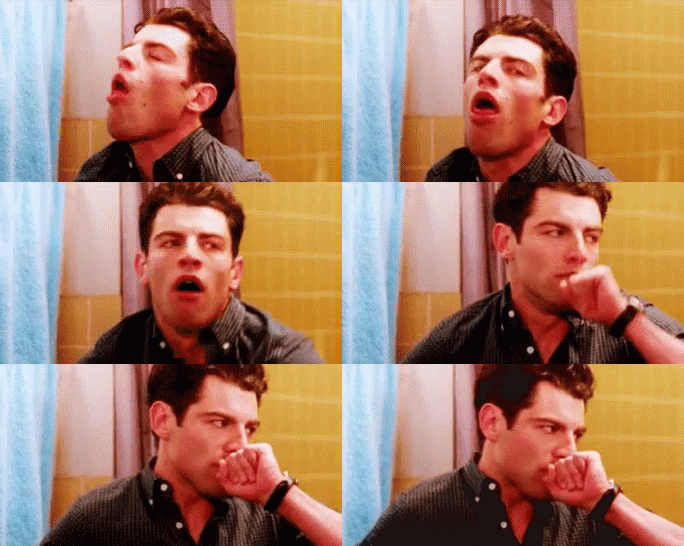
I gagged.


My dearest friends, who am I if a swallow of Malta makes me gag? Did the Rockstar Neurosurgeon scoop out the Latina part of my brain?

Maybe I should try another couple of swallows.


Nope. No good. It tasted chocolatey and rancid in all the wrong ways, and I was pretty sure that I was going to vomit. 

The spirits of my ancestors had abandoned me, left me to rot in a Malta-less hell where I didn't know who I was anymore.

So, I dumped out the rest of the bottle and tried not to cry.

The husband could see the distress in my face, and I wanted to lay down on the floor and cry.

Remember how I said it was the last pack on the bottom shelf?

I just remembered that, and took a look at the bottle I had just dumped.

Expiration date - wait for it - July TWO THOUSAND SIXTEEN.

Yeah. For real. The bottle had 07/16 printed on it.

It was not that the Rockstar Neurosurgeon had scooped out the Latina part of my brain, it was that my palate can't handle FOUR-YEAR-OLD Malta!

Whoo! Needless to say, that was roller coaster ride of emotions.

I don't know how I'm going to find non-four-year-old Malta, but my already shaky identity is now slightly more solid. 

Can Malta be mailed?

March 21, 2020

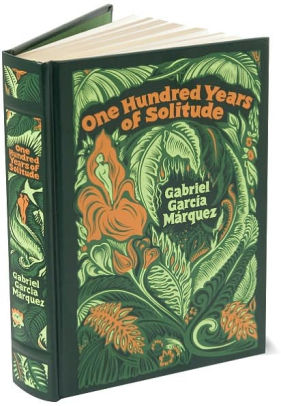
Fave Quote of the Book: One Hundred Years of Solitude by Gabriel Garcia Marquez

One Hundred Years of Solitude by Gabriel Garcia Marquez
Amazon link:
One of the twentieth century's enduring works, One Hundred Years of Solitude is a widely beloved and acclaimed novel known throughout the world and the ultimate achievement in a Nobel Prize-winning career.

The novel tells the story of the rise and fall of the mythical town of Macondo through the history of the Buendía family. Rich and brilliant, it is a chronicle of life, death, and the tragicomedy of humankind. In the beautiful, ridiculous, and tawdry story of the Buendía family, one sees all of humanity, just as in the history, myths, growth, and decay of Macondo, one sees all of Latin America.

Love and lust, war and revolution, riches and poverty, youth and senility, the variety of life, the endlessness of death, the search for peace and truth -- these universal themes dominate the novel. Alternately reverential and comical, One Hundred Years of Solitude weaves the political, personal, and spiritual to bring a new consciousness to storytelling. Translated into dozens of languages, this stunning work is no less than an account of the history of the human race.
I've read this book before, and only recently finished it. I don't know if I struggled with it because my brains have been poked and prodded, or because my memory sucks, or because this is just a tough book, but it takes place over the course of a literal hundred years, and many of the characters have the same names across generations. Aureliano Buendía and the 17 (literally 17) other Aurelianos over the years made this book a challenge for me this time around, but even though I found it challenging, I loved it. Gabriel García Marquez is the king of magical realism, and he gives the reader no chance to figure out which way is up before someone inexplicably floats away, someone else goes blind and nobody notices, and for no discernible reason, it rains for more than four years.

The version I read was translated by Gregory Rabassa, and he did an incredible job of keeping the lyrical prose and the poetry embedded in the plot with chapters that enveloped me in beautiful words and sentences like a warm blanket.

My favorite quote from this book, when a group of men are traveling through a dense jungle:
"The men on the expedition felt overwhelmed by their most ancient memories in that paradise of dampness and silence, going back to before original sin . . . For a week, almost without speaking, they went ahead like sleepwalkers through a universe of grief" (Garcia Marquez 11).
A universe of grief. My God, how beautiful is that?

I imagine the all-encompassing silence in this dense jungle. I remember the days after my diagnosis. After the sobbing, after the hysterics, the panic and fear. The stillness in the house. I felt like I was silently drowning in my sorrow. Shattered to pieces, scattered all over the floor. Days merged into nights, and still I cried until I was all dried up inside.

The men in this chapter are overwhelmed by ancient memories, and I was overwhelmed with ancient traumas from my youth rising to the surface unexpectedly. Old hurts mixed with the new, perhaps as a reminder we are made of all the pieces of our pasts, whether we like it or not. They say that the present is a gift, but if I may be so crude, sometimes, it is a shitty gift, the kind where you paste on a fake smile and hope nobody notices the disappointment in your eyes.

This universe of grief still overwhelms me. I mourn the many things I have lost, from the piece of bone in my skull to the ability to actively engage in large groups of people without debilitating anxiety. I grieve for all of these lost things, but none of that grief can be expressed as beautifully as GGM did. Read this book. It is beautiful and it is weird, and it is worth every page.

February 20, 2020

New and very important boundary

This is an important message to all of my close friends and family, especially those who know when my birthday is.

I am not going to say when it is, because I've made an important decision. As an adult, I've never liked making a big deal about my birthday, again, because most of my decisions are based on receiving the least amount of attention. It's the reason I had a not-so-traditional wedding. It's the reason I've not celebrated my birthday in public in years, and it's the reason I have a fake birthday set on FB that remains private, only visible to me, so that FB doesn't remind people about a day that I don't wish to be reminded about.

I say all of this because the anniversary of the day of my birth is coming up at some point in the next 2-9 months. If you know when my birthday is, and if you value our relationship at all, you will not share it, and you will not wish me felicidades. You will keep that date a secret.

This is a hard line for me. I have too much on my mind and in my brain to deal with birthday wishes. My mental health depends on those of you who know this secret to keep it secret.

Something I've learned as a cancer patient is that boundaries are important, but even more important are consequences.

There are those of you who will long to celebrate my birthday by announcing something on social media, unattached to this blog.


Do not do this.

There are those who might try to subtly and secretly let my "special day" be known for their friends, the family of those friends, and the friends of that family.


Do not do this.

Some of you will want to do something special for me, because in some deep morbid corner of your mind, you might be worried that it will be my last birthday.


Do not do this.

Anyone who wishes me a happy birthday, knowing that I am dealing with brain cancer, brain cancer treatments, possible surgeries, and the mental health costs that come with brain cancer will be blocked without prejudice. This includes my best friend from college, my sisters, the one co-worker who knows the day, The Husband, even my mother.

Y'all. I am not playing with this one.


Please, I beg of you, especially my beloved family and friends who know when my birthday is: Pretend you don't. My mental health depends on it.

January 24, 2020

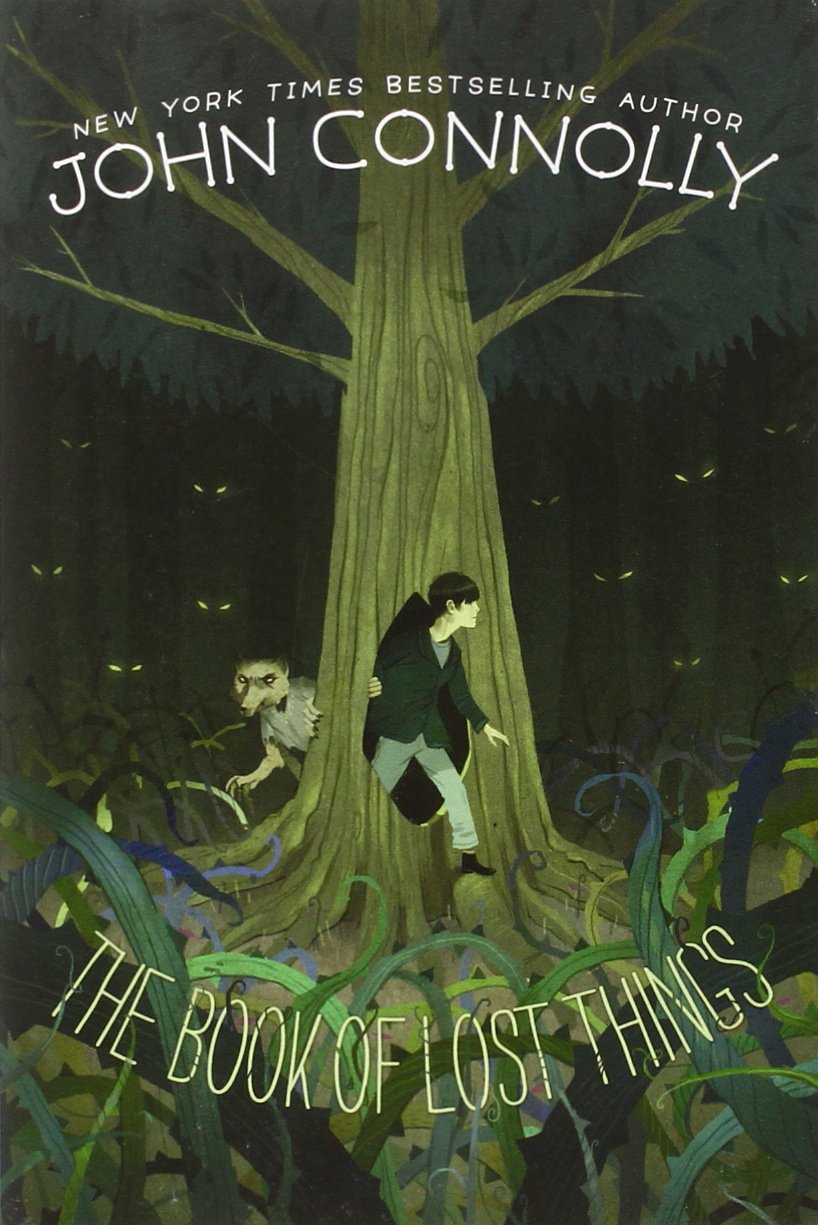
Books: The Book of Lost Things by John Connolly (Fin)

I am finally and unfortunately finished with this story. This is the kind of story that I wish I could start again and read it for the first time again. Immediately upon finishing this story, I realized that I would need to rearrange my top 10 favorite books, because this Book of Lost Things was firmly in the top 5. At the ending of this beautiful book, David returns to the land that is not quite like our own to find that it continues to reveal surprises.


"[A] woman appeared. She had dark hair and green eyes. In her arms she held a baby boy, barely out of the womb, who clutched at her blouse as she walked, for a lifetime was but a moment in that place, and each man dreams his own heaven. And in the darkness David closed his eyes, as all that was lost was found again" (Connolly 338-9).
Damn you, John Connolly, for writing a book that brought actual tears to my eyes! It has been quite a long time since a book has made me cry, and every time I re-read these last few sentences, I feel that tingle, as if I were cutting onions.

I don't know if everyone fears death, but I do know that there are only two innate fears that every human is born with: falling, and loud noises (the "acoustic startle reflex"). Do I fear death?

Sometimes.

Sometimes it terrifies the hell out of me. One thing that I struggle with is the unknown (as I am sure is common for many of us). Death being the ultimate unknown is terrifying. But occasionally, every once in a long while, I will find a moment of peace. Was I afraid of being born? What, fundamentally, is the difference?

Unanswerable questions.

Back to The Book of Lost Things: a death like David's seems almost unfair. No pain. No trauma. Just the final literal steps in a journey, only to be greeted by those whom he had loved and lost and found again.

If death is like this, there is nothing to fear. There is nothing but joy and love at the end of the journey. We could spend a lifetime regretting the things we may or may not have done, but regret is meaningless in the end. Regardless of what you do or do not believe in, and regardless of your faith or lack thereof, save the regrets. Instead, spread joy and love where you can.

So.

Instead of regrets, I will try to cherish my memories and my mistakes. Those mistakes have made me who I am today. In the end, I can only hope that sharing joy and love will balance out any mistakes I have made.

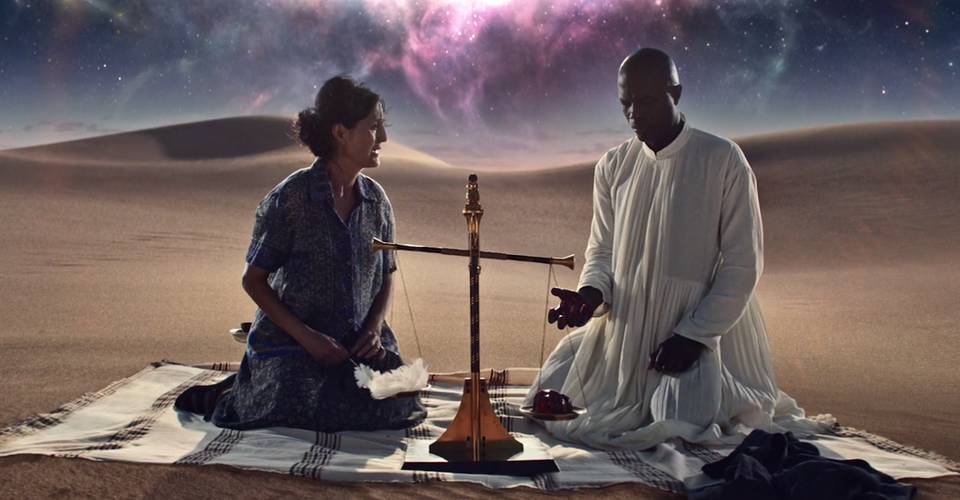
Anubis casting judgment in S1 Ep3 of American Gods

January 14, 2020

Books: The Book of Lost Things by John Connolly (Penultimate)

Towards the end of this story, David has grown old. He married and was widowed. He wrote his story in the book that I hold in my hand now, and he called it The Book of Lost Things. As he did in his childhood, he can hear the books in his room speaking to him; however, unlike his time as a child, he is no longer afraid of the voices.


"[I]n the deepest, darkest hours of the night, David would lie awake and listen. The books had started whispering again, yet he felt no fear. They spoke softly, offering words of comfort and grace" (Connolly 337).

My entire journey with this diagnosis has been one of learning to give myself grace. We are all our own worst critics, and I will be the first to admit that I am no peach, but I have learned the hard way that I need to be more forgiving of myself. I mess things up. I forget things. I drop food on the floor. I trip over nothing, and lose my balance like a drunk sailor even in the stability of my own house. Grace has been a difficult gift to give myself.

Meanwhile, I have more books than I will ever have time to read, The Husband built me three heavy-duty bookshelves with approximately 75 feet of shelf space total, and yet I still have books in my Amazon cart that I plan to order soon.

There was a time when I feared the future. I always said that life is too short for bad books, and I was afraid of there coming a time when I couldn't escape into the worlds contained within those hallowed pages. After brain surgery, I couldn't read; not that I was illiterate, but that I was incapable of maintaining the focus necessary for reading. After my diagnosis, I had an existential crisis. What was the point of reading stories, beautiful, engrossing, dreamlike stories, if there is an expiration date stamped on my brain?

I didn't want to die in the middle of reading a book. I didn't want to leave a story unfinished.

It has taken a lot of time, and a lot of meditation for me to realize that the only thing I can do is keep on keeping on. Inertia is my friend here. I have found myself able to lose myself in books once again (ha! Get it?). I have escaped into worlds unknown and worlds intimately familiar, like old friends .

I'm still interacting with the idea of giving myself grace. But after that hiatus from reading immediately after my surgery, I am so grateful that I can lose myself in the countless worlds that surround me in the pages of my treasured books. Truth be told, like David in this book, I find comfort in being surrounded by my books. They are my oldest friends, my truest family, my beloveds.

This may seem callous to my friends, my family, or The Husband, but everyone who knows me knows that I am who I am because of these books. The book that inspired me to apply to Clemson University (The Hot Zone by Richard Preston). The book that inspired me to teach (The Grass is Singing by Doris Lessing). The book that inevitably brought me to tears when I needed a good cathartic cry session (The Time Traveler's Wife by Audrey Niffenegger). The books that inspired tattoos (The Traveler by John Twelve Hawks, The Hitchhiker's Guide to the Galaxy by Douglas Adams, The Sandman Series by Neil Gaiman). I have found inspiration and comfort within the pages of these books. I have found how to mend a broken heart, and how to love, truly love. I have learned about myself, and other people. My own culture and those unknown to me. My mind and my heart. My fears and my passions. So much still to learn.

I am surrounded by my cherished books, and they offer me comfort and grace.

January 10, 2020

Books: The Power of Myth by Joseph Campbell with Bill Moyers (Part 4)

I am still working my way through The Power of Myth, and today, I want to think about the answer to life, the universe, and everything.
Before I get to that, remember that last time, I talked about learning from our imperfections, and I examined the cycle of death and life and death again. I looked at the beauty and ugliness in the world, and in myself.


I'm mentioned before that I've been a lifelong cynic, always the pessimist. I am sarcastic, I have a dark and morbid sense of humor, and I am composed of 65% snark, 25% spite, and 25% bad at math. I've been a lifelong cynic because life has been hard. I suffered a traumatic loss at fifteen years old. My first husband was no gem. My bad attitude cost me friends. I was an underachiever. I was born right at the edge of Gen X and right at the beginning of the Millennial generation; cynicism comes naturally to me.

Campbell discusses men risking their lives to rescue their compatriots during the Vietnam War. I would argue that it takes an extremely idealistic type of person to take such a risk for someone else. This kind of person must do what they do because there is some hope that they will succeed. Campbell says,
"Life is pain; life is suffering; and life is horror—but, by God, you are alive. Those young men in Vietnam were truly alive in braving death for their fellows" (Campbell and Moyers 141).
Life is funny that way. No matter how pessimistic we are, no matter how low our expectations are, life finds a way to kick you in the rear. All that pain, all that suffering, all that horror.


All of this adds up to so much terribleness (that doesn't seem like it should be a word), and yet here we are, plugging along, doing the best we can, even though we hurt, and we die. Even though we are frightened and alone. Even though we are betrayed and broken-hearted.

I know that I have the darkness: the pain, suffering, and horror are inside of me. I suspect they are inside of so many others.

But sharing that darkness inside of me with you allows me to have a spark of hope.

All it takes is one spark to light a fire.

January 8, 2020

Books: The Book of Lost Things by John Connolly (The Gift of Ignorance)

While David is in this land that is not quite like our own, he is stalked by the villain of the story, the Crooked Man. At this point, he has discovered the Crooked Man's lair, with a thousand rooms and for each room, a story. Many of these rooms have stories that are almost, but not quite, familiar. A girl with a red hood. A gingerbread house. A witch.


In one of those rooms,
"a woman sat facing a blank wall, endlessly combing her long, silver hair. Sometimes, the Crooked Man would take those who had angered him to visit the woman, and when she turned to look at them, the would see themselves reflected in her eyes, for her eyes were made of mirrored glass. And in those eyes they would be allowed to witness the moment of their deaths, so that they would know exactly when and how they would die. You might think that such knowledge would not be so terrible, and you would be wrong.

We are not meant to know the time or the nature of our deaths (for all of us secretly hope that we may be immortal). Those who were given that knowledge found that they could not sleep or eat or enjoy any of the pleasures life had to offer them, so tormented were they by what they had seen. Their lives became a kind of living death, devoid of joy, and all that was left to them was fear and sadness, so that when at last the end came they were almost grateful for it" (Connolly 295).

I have mentioned many times before that I have my oncology team with all of their fancy degrees. These are very smart people. These are the only people allowed to provide me with medical advice. No Dr. Google, right? This passage also explains exactly why I choose (at least for now) intentional ignorance. For all I know, I have 10 days, 10 weeks, 10 years in front of me. As a direct result of my intentional ignorance, I have been able to not only enjoy beautiful things, but also forget, even for a few moments here and there, that I have cancer. There was Sunflower Day. The day that I didn't ring that bell. I got to Van Gogh to the Museum. I went to a hockey game.

The Husband has given me the gift of maintaining intentional ignorance, and it truly is a difficult gift to give. He carries the weight of knowledge on his shoulders and in his soul, and I know that weight is a difficult one to bear.

Because he has given me this incredible gift, I have had so many moments of pure joy. We have so many moments that I don't usually share, because to me, they are sacred.

I still don't have an official prognosis. Perhaps at the next scan there will be more news. But right now, because The Husband has given me the gift of intentional ignorance, I am able to experience true joy. The life I get to experience now is so fundamentally different from the Before. I try not to grieve too much for the Before life. Life now is different, but certain things have not changed. The Husband is still as big a dork as before (I can say that because I, in fact, am also a big dork). We still laugh together. I am grateful that I can still laugh, even in the face of all of this ugliness, but that is only possible because I have The Husband, the greatest gift of all.

Have I mentioned that I love this guy?

January 4, 2020

Books: The Power of Myth by Joseph Campbell with Bill Moyers (Part 3)

I am still working on The Power of Myth, and today, I want to talk about a concept with which I've always been fascinated: beauty. Before I get to that, remember that last time, I talked about learning from our imperfections, and I examined the cycle of death and life and death again.


I've written term papers about beauty versus ugliness, and thought at length about the ramifications of the conventional Western beauty standard. This diagnosis of mine has changed me in so many ways, including in the way that I think about beauty. I've mentioned before that I don't consider myself to be vain, and I've discussed my hair at length. I still don't consider myself overly vain, but I will say that the way I think about beauty has changed a bit.

In the before, I used to consider beauty primarily in regards to the physical: people, faces, bodies. I found beauty in the written word, the shape of trees, the melody of my favorite songs. It simply hadn't occurred to me to deliberately consider the intangible beauty that can be found elsewhere.


Campbell discusses art and beauty.
"When a spider makes a beautiful web, the beauty comes out of the spider's nature. It's instinctive beauty. How much of the beauty of our own lives is about the beauty of being alive? How much of it is conscious and intentional" (Campbell and Moyers 100)?
In the world outside of us, there is so much beauty, and in the worlds within us, there lies beauty as well. There is beauty in reconnecting with old friends, even when the cause of this reconnecting is so very ugly. There is also beauty in meeting new friends, becoming part of a community through shared adversity.

I've felt such ugliness. When I was first diagnosed, I did not feel any beauty in being alive. I was devastated that this extraordinary life of mine had turned out to be so ugly. I tried to deny the truth of this diagnosis. I simply couldn't imagine living in a world where this was my reality.

My anger was all-encompassing.

I hated the world and everything in it. It was ugly, and I couldn't bear to be a part of a world that harbored this ugliness inside of me. I could find no beauty in being alive.

You have to understand, even when the emergency room doctor told me that there was a mass on my brain, I never once considered cancer. Even the word is ugly.

As time has passed, and I've had the unfortunate opportunity to become accustomed to this ugliness, I'm finding that there is a small but quiet change happening within me.

I still feel the ugliness inside of me. I am still angry.

Yet I have discovered some beauty. Not in my hair, and not in the bags under my eyes, but in the kindness and compassion of my friends, in the generosity of my family, the love of The Husband. Sometimes I have to remind myself that it is not always so ugly. There is that ugliness inside of me, but there is also a nugget of something not quite so ugly hiding out in there.

December 27, 2019

Books: The Book of Lost Things by John Connolly (Fear of Death)

In this story, David gets pulled into a world not quite like ours, and while traveling this world, he meets various people and creatures, some good, some evil.


One of those people is Roland, a soldier. David is traveling to find the king of this land not quite like ours, and Roland is traveling to find Raphael, his friend and "the blood in [Roland's] veins, the sweat on [his] brow." Without him, Roland says that he is less than he once was, and he fears Raphael may be dead (Connolly 207). David asks Roland if he is afraid of dying in his quest to find Raphael (Connolly 207). Roland responds:
"'I am afraid of the pain of dying . . . I have been wounded before, once so badly that it was feared I would not survive. I can recall the agony of it, and I don't wish to endure it again. But I feared more the death of others. I did not want to lose them, and I worried about them while they were alive. Sometimes, I think that I concerned myself so much with the possibility of their loss that I never truly took pleasure in the fact of their existence'" (Connolly 207).
I have had to think about the so-called bus that could hit me tomorrow, but through this, I have been far more worried about the bus that could hit The Husband next week, that could hit my sisters next month, that could take away those whom I love and cherish. This terrible diagnosis has forced me to contemplate death with far more depth and detail than I would prefer.

The interesting part of this is that the more I think about death, the less afraid I am, for myself. Death is a universal truth. While, hopefully, it is obvious that I am in no rush to meet him, and I would be so pleased if he could pass me by, that is childish fantasy. I don't want to say that I am not afraid, but less afraid as a result of this choice to contemplate him.

Even now, I am far more terrified of losing those whom I love. I am a master worrier, and yes, I can and will worry myself to pieces if I haven't heard from Baby Sister in several days, or if The Husband takes an unusually long time to get home. So I can fully understand Roland's take on death. We are all dying (hopefully slowly). This story speaks to what I think may be a common experience for many of us. The fear of losing someone else hurts far more than the fear of losing myself. At this point, I've come as close as I can to accepting my diagnosis. I don't like it, but it is what it is.

Today is the 6-month cancerversary of my diagnosis. This diagnosis changed my life. I felt so much loss. Like I could no longer keep a grasp on the life most extraordinary I used to have with The Husband. The thing is, after six months, I've figured some stuff out. Yes, we still worry. Those bills won't pay for themselves. The GoFundMe has stalled out and we aren't sure how to get it rolling again. 

I don't remember the last time I cried for myself. I don't know if I need to worry about that. It seems like I am reminded of my condition in different ways. The tremor in my hand. The trouble sleeping. The weird cold flashes (anti-menopause?). The unpredictable appetite. The handful of pills I have to take every day. The constant and never-ending fatigue. The constant and never-ending co-pays.


I worry constantly. But The Husband is there to hold my hand and comfort me. I am lucky to have the opportunity to take pleasure in the fact of his existence, for I know that I could not have made it this far without him.

December 23, 2019

Van Gogh-ing to the Museum!

The Husband is awesome. My friend K is awesome. My friend Z is awesome.

K mentioned on Facebook that there was going to be a Van Gogh exhibit nearby, about two hours away. I mentioned it to The Husband, who immediately said, "Book a hotel. We're going."

He knows how I feel about Van Gogh.

My friend Z joined us, which as always, I enjoyed hanging out with one of my oldest and closest friends.

This exhibit had 12 of Van Gogh's works, along with many other works by other artists to demonstrate those who influenced Van Gogh, or were influenced by him.

I love Van Gogh. This will sound ridiculous and I don't care, I always liked Van Gogh, but it wasn't until the Van Gogh episode of Doctor Who that I discovered that I loved Van Gogh.

By no means am I some kind of art critic or art historian. I know what I like. Sometimes, I even know why I like it. I also know what I don't like, and sometimes I can verbalize why I don't like it. As The Husband and Z and I discussed at length, not all art is art just because someone called it art, and some works, while skillfully created, should not be considered art.

How do you decide what is art?

For me, not everything that Van Gogh painted, drew, and sketched was art, but so much of it is. For me, I call it art because it makes me feel something. Because I feel like I can relate to it. Because I feel like I can understand what the artist was feeling.

Van Gogh was well-known to be a troubled man. He suffered from depression, and did not find success as an artist until after his death.

The thing that I like about so many of his works is that they make me sad. It may sound strange to say it like that, but it's true. He was a sad man, and that sadness radiates off of the canvas. Sure, I like Starry Night, everyone likes Starry Night, but he had so many masterpieces. Starry Night looks like he was looking at the sky through tears.

The exhibit we went to did not have Starry Night, but it did have Self-Portrait. I love this one. He looks so angry. Almost hateful. Somewhere beneath the rage in his eyes, I see a sense of self-loathing.


To look into his eyes in this painting is to feel his pain. He is so serious. You can't smile for this picture. You can only try to understand an artist who seems to have been caught by surprise, who did not have time to paste a fake smile on his face, who showed a vulnerability that he didn't necessarily want to show.

How did he paint this? Did he spend his winter of 1886-7 looking at himself in a mirror? Examining every detail of his face, the darkness behind his eyes? Did he struggle to look at himself?

When I have been in the deepest depressions, I have had trouble even looking myself in the eyes in the mirror. There have been times when weeks or months have passed and I haven't seen my own eyes because I couldn't bear to look at myself.

Did he feel some catharsis in painting himself? Did it hurt him to have to look at himself just to get this painting done?

I, too, have suffered from depression at various points in my life. I look into his eyes, and I feel a certain, almost, kinship, and then I saw this:

This is Man with Spade. The write-up next to it said that this was a worker taking a lunch break from digging ditches, but what I saw was a soldier, exhausted, after digging graves. Yes, I know that it's dark, but it is Van Gogh, and again, it felt like grief radiating from the charcoal in the sketch.


A Trunk of a Tree. Not a painting, but a pen and sepia on paper. I love the details in this work. I love that the top of the tree appears very intentionally detailed, with strong lines. I love that the trunk of the tree is remarkably understated, as if added detail would be unnecessary. I just love this.

 Finally, here is Constantin Meunier's Ophelie. It is not a Van Gogh, but I saw this painting out of the corner of my eye and I was drawn to it. The paleness of the figure. The darkness of her gown. The storm clouds to the right, and what looks like a clearing in the sky on the left, as if her troubles are past now that she has taken this final action.

I so enjoyed our visit to the museum, and The Husband was kind enough to buy me goodies from the gift shop. I was very tired, as this was the longest I had been on my feet. What this means is that my impulse control was all but gone, and I wanted ALL the Van Gogh souvenirs from the gift shop. I didn't get ALL of them, but I got two beautiful packs of notecards (who wants to be a pen pal?), stickers, a print, some postcards to put in my journal, and a magnet (that I made Z buy for me).

So there you have it: proof that I can do more than read books and have cancer! Ha!