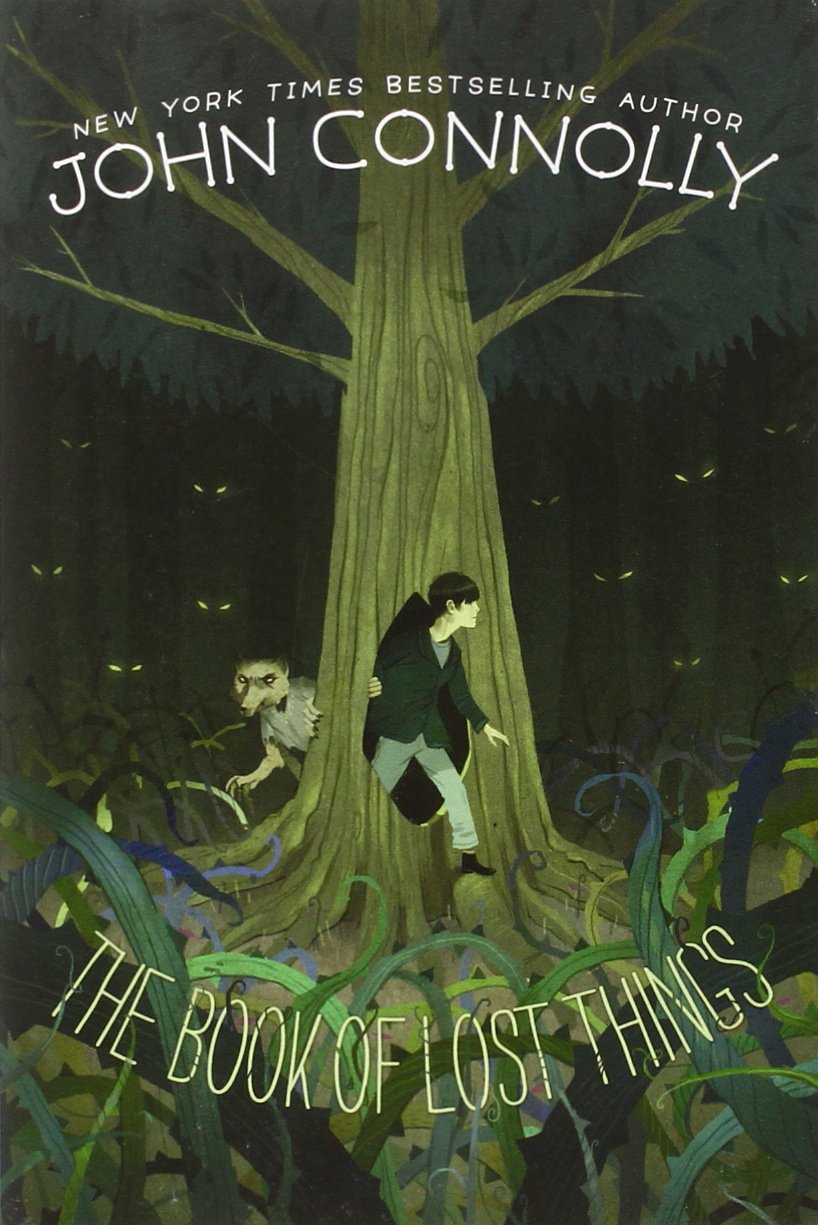
Showing posts with label The Book of Lost Things John Connolly. Show all posts

January 24, 2020

Books: The Book of Lost Things by John Connolly (Fin)

I am finally and unfortunately finished with this story. This is the kind of story that I wish I could start again and read it for the first time again. Immediately upon finishing this story, I realized that I would need to rearrange my top 10 favorite books, because this Book of Lost Things was firmly in the top 5. At the ending of this beautiful book, David returns to the land that is not quite like our own to find that it continues to reveal surprises.


"[A] woman appeared. She had dark hair and green eyes. In her arms she held a baby boy, barely out of the womb, who clutched at her blouse as she walked, for a lifetime was but a moment in that place, and each man dreams his own heaven. And in the darkness David closed his eyes, as all that was lost was found again" (Connolly 338-9).
Damn you, John Connolly, for writing a book that brought actual tears to my eyes! It has been quite a long time since a book has made me cry, and every time I re-read these last few sentences, I feel that tingle, as if I were cutting onions.

I don't know if everyone fears death, but I do know that there are only two innate fears that every human is born with: falling, and loud noises (the "acoustic startle reflex"). Do I fear death?

Sometimes.

Sometimes it terrifies the hell out of me. One thing that I struggle with is the unknown (as I am sure is common for many of us). Death being the ultimate unknown is terrifying. But occasionally, every once in a long while, I will find a moment of peace. Was I afraid of being born? What, fundamentally, is the difference?

Unanswerable questions.

Back to The Book of Lost Things: a death like David's seems almost unfair. No pain. No trauma. Just the final literal steps in a journey, only to be greeted by those whom he had loved and lost and found again.

If death is like this, there is nothing to fear. There is nothing but joy and love at the end of the journey. We could spend a lifetime regretting the things we may or may not have done, but regret is meaningless in the end. Regardless of what you do or do not believe in, and regardless of your faith or lack thereof, save the regrets. Instead, spread joy and love where you can.

So.

Instead of regrets, I will try to cherish my memories and my mistakes. Those mistakes have made me who I am today. In the end, I can only hope that sharing joy and love will balance out any mistakes I have made.
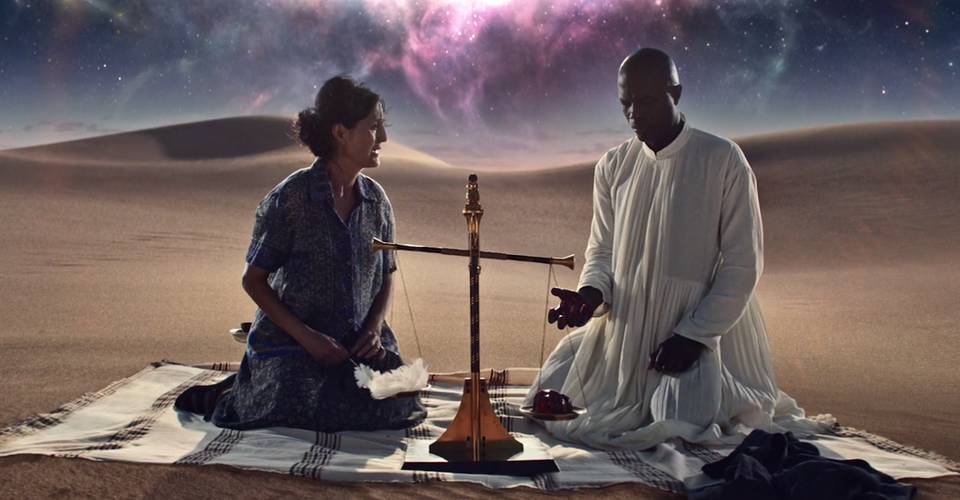
Anubis casting judgment in S1 Ep3 of American Gods

January 14, 2020

Books: The Book of Lost Things by John Connolly (Penultimate)

Towards the end of this story, David has grown old. He married and was widowed. He wrote his story in the book that I hold in my hand now, and he called it The Book of Lost Things. As he did in his childhood, he can hear the books in his room speaking to him; however, unlike his time as a child, he is no longer afraid of the voices.


"[I]n the deepest, darkest hours of the night, David would lie awake and listen. The books had started whispering again, yet he felt no fear. They spoke softly, offering words of comfort and grace" (Connolly 337).

My entire journey with this diagnosis has been one of learning to give myself grace. We are all our own worst critics, and I will be the first to admit that I am no peach, but I have learned the hard way that I need to be more forgiving of myself. I mess things up. I forget things. I drop food on the floor. I trip over nothing, and lose my balance like a drunk sailor even in the stability of my own house. Grace has been a difficult gift to give myself.

Meanwhile, I have more books than I will ever have time to read, The Husband built me three heavy-duty bookshelves with approximately 75 feet of shelf space total, and yet I still have books in my Amazon cart that I plan to order soon.

There was a time when I feared the future. I always said that life is too short for bad books, and I was afraid of there coming a time when I couldn't escape into the worlds contained within those hallowed pages. After brain surgery, I couldn't read; not that I was illiterate, but that I was incapable of maintaining the focus necessary for reading. After my diagnosis, I had an existential crisis. What was the point of reading stories, beautiful, engrossing, dreamlike stories, if there is an expiration date stamped on my brain?

I didn't want to die in the middle of reading a book. I didn't want to leave a story unfinished.

It has taken a lot of time, and a lot of meditation for me to realize that the only thing I can do is keep on keeping on. Inertia is my friend here. I have found myself able to lose myself in books once again (ha! Get it?). I have escaped into worlds unknown and worlds intimately familiar, like old friends .

I'm still interacting with the idea of giving myself grace. But after that hiatus from reading immediately after my surgery, I am so grateful that I can lose myself in the countless worlds that surround me in the pages of my treasured books. Truth be told, like David in this book, I find comfort in being surrounded by my books. They are my oldest friends, my truest family, my beloveds.

This may seem callous to my friends, my family, or The Husband, but everyone who knows me knows that I am who I am because of these books. The book that inspired me to apply to Clemson University (The Hot Zone by Richard Preston). The book that inspired me to teach (The Grass is Singing by Doris Lessing). The book that inevitably brought me to tears when I needed a good cathartic cry session (The Time Traveler's Wife by Audrey Niffenegger). The books that inspired tattoos (The Traveler by John Twelve Hawks, The Hitchhiker's Guide to the Galaxy by Douglas Adams, The Sandman Series by Neil Gaiman). I have found inspiration and comfort within the pages of these books. I have found how to mend a broken heart, and how to love, truly love. I have learned about myself, and other people. My own culture and those unknown to me. My mind and my heart. My fears and my passions. So much still to learn.

I am surrounded by my cherished books, and they offer me comfort and grace.

January 8, 2020

Books: The Book of Lost Things by John Connolly (The Gift of Ignorance)

While David is in this land that is not quite like our own, he is stalked by the villain of the story, the Crooked Man. At this point, he has discovered the Crooked Man's lair, with a thousand rooms and for each room, a story. Many of these rooms have stories that are almost, but not quite, familiar. A girl with a red hood. A gingerbread house. A witch.


In one of those rooms,
"a woman sat facing a blank wall, endlessly combing her long, silver hair. Sometimes, the Crooked Man would take those who had angered him to visit the woman, and when she turned to look at them, the would see themselves reflected in her eyes, for her eyes were made of mirrored glass. And in those eyes they would be allowed to witness the moment of their deaths, so that they would know exactly when and how they would die. You might think that such knowledge would not be so terrible, and you would be wrong.

We are not meant to know the time or the nature of our deaths (for all of us secretly hope that we may be immortal). Those who were given that knowledge found that they could not sleep or eat or enjoy any of the pleasures life had to offer them, so tormented were they by what they had seen. Their lives became a kind of living death, devoid of joy, and all that was left to them was fear and sadness, so that when at last the end came they were almost grateful for it" (Connolly 295).

I have mentioned many times before that I have my oncology team with all of their fancy degrees. These are very smart people. These are the only people allowed to provide me with medical advice. No Dr. Google, right? This passage also explains exactly why I choose (at least for now) intentional ignorance. For all I know, I have 10 days, 10 weeks, 10 years in front of me. As a direct result of my intentional ignorance, I have been able to not only enjoy beautiful things, but also forget, even for a few moments here and there, that I have cancer. There was Sunflower Day. The day that I didn't ring that bell. I got to Van Gogh to the Museum. I went to a hockey game.

The Husband has given me the gift of maintaining intentional ignorance, and it truly is a difficult gift to give. He carries the weight of knowledge on his shoulders and in his soul, and I know that weight is a difficult one to bear.

Because he has given me this incredible gift, I have had so many moments of pure joy. We have so many moments that I don't usually share, because to me, they are sacred.

I still don't have an official prognosis. Perhaps at the next scan there will be more news. But right now, because The Husband has given me the gift of intentional ignorance, I am able to experience true joy. The life I get to experience now is so fundamentally different from the Before. I try not to grieve too much for the Before life. Life now is different, but certain things have not changed. The Husband is still as big a dork as before (I can say that because I, in fact, am also a big dork). We still laugh together. I am grateful that I can still laugh, even in the face of all of this ugliness, but that is only possible because I have The Husband, the greatest gift of all.

Have I mentioned that I love this guy?

December 27, 2019

Books: The Book of Lost Things by John Connolly (Fear of Death)

In this story, David gets pulled into a world not quite like ours, and while traveling this world, he meets various people and creatures, some good, some evil.


One of those people is Roland, a soldier. David is traveling to find the king of this land not quite like ours, and Roland is traveling to find Raphael, his friend and "the blood in [Roland's] veins, the sweat on [his] brow." Without him, Roland says that he is less than he once was, and he fears Raphael may be dead (Connolly 207). David asks Roland if he is afraid of dying in his quest to find Raphael (Connolly 207). Roland responds:
"'I am afraid of the pain of dying . . . I have been wounded before, once so badly that it was feared I would not survive. I can recall the agony of it, and I don't wish to endure it again. But I feared more the death of others. I did not want to lose them, and I worried about them while they were alive. Sometimes, I think that I concerned myself so much with the possibility of their loss that I never truly took pleasure in the fact of their existence'" (Connolly 207).
I have had to think about the so-called bus that could hit me tomorrow, but through this, I have been far more worried about the bus that could hit The Husband next week, that could hit my sisters next month, that could take away those whom I love and cherish. This terrible diagnosis has forced me to contemplate death with far more depth and detail than I would prefer.

The interesting part of this is that the more I think about death, the less afraid I am, for myself. Death is a universal truth. While, hopefully, it is obvious that I am in no rush to meet him, and I would be so pleased if he could pass me by, that is childish fantasy. I don't want to say that I am not afraid, but less afraid as a result of this choice to contemplate him.

Even now, I am far more terrified of losing those whom I love. I am a master worrier, and yes, I can and will worry myself to pieces if I haven't heard from Baby Sister in several days, or if The Husband takes an unusually long time to get home. So I can fully understand Roland's take on death. We are all dying (hopefully slowly). This story speaks to what I think may be a common experience for many of us. The fear of losing someone else hurts far more than the fear of losing myself. At this point, I've come as close as I can to accepting my diagnosis. I don't like it, but it is what it is.

Today is the 6-month cancerversary of my diagnosis. This diagnosis changed my life. I felt so much loss. Like I could no longer keep a grasp on the life most extraordinary I used to have with The Husband. The thing is, after six months, I've figured some stuff out. Yes, we still worry. Those bills won't pay for themselves. The GoFundMe has stalled out and we aren't sure how to get it rolling again. 

I don't remember the last time I cried for myself. I don't know if I need to worry about that. It seems like I am reminded of my condition in different ways. The tremor in my hand. The trouble sleeping. The weird cold flashes (anti-menopause?). The unpredictable appetite. The handful of pills I have to take every day. The constant and never-ending fatigue. The constant and never-ending co-pays.


I worry constantly. But The Husband is there to hold my hand and comfort me. I am lucky to have the opportunity to take pleasure in the fact of his existence, for I know that I could not have made it this far without him.

December 20, 2019

Books: The Book of Lost Things by John Connolly (Intro)

I recently finished this book that I had been simul-reading with The Power of Myth by Joseph Campbell and Bill Moyers, and I need each and every one of you to get your hands on a copy and read it immediately: The Book of Lost Things by John Connolly.

Amazon describes it as such:
"High in his attic bedroom, twelve-year-old David mourns the death of his mother. He is angry and alone, with only the books on his shelf for company. But those books have begun to whisper to him in the darkness, and as he takes refuge in his imagination, he finds that reality and fantasy have begun to meld. While his family falls apart around him, David is violently propelled into a land that is a strange reflection of his own world, populated by heroes and monsters, and ruled over by a faded king who keeps his secrets in a mysterious book... The Book of Lost Things."
When I started reading this book, I was immediately devastated and immediately hooked.
"Once upon a time—for that is how all stories should begin—there was a boy who lost his mother. He had, in truth, been losing her for a very long time" (Connolly 1).
If this isn't a gut punch of an opening, I don't know what is. It grabbed me by the heart and squeezed, refusing to let me go. This is a story that could not be ignored or set aside.
—

From https://www.thepunctuationguide.com/em-dash.html
© 2019 thepunctuationguide.com
—

From https://www.thepunctuationguide.com/em-dash.html
© 2019 thepunctuationguide.com

The protagonist is 12-year-old David, and his mother is dying of some unnamed illness.
"Before she became ill, David's mother would often tell him that stories were alive. They weren't alive in the way that people were alive, or even dogs or cats. People were alive whether you chose to notice them or not, while dogs tended to make you notice them if they decided that you weren't paying them enough attention. Cats, meanwhile, were very good at pretending people didn't exist at all when it suited them" (Connolly 3).
Okay. Excellent description of people, dogs, and cats. But stories... I am intrigued.

"Stories were different, though: they came alive in the telling.[. . .] Once someone started to read them, they could begin to change. They could take root in the imagination, and transform the reader. Stories wanted to be read, David's mother would whisper. They needed it. It was the reason they forced themselves from their world into ours. They wanted us to give them life" (Connolly 3).
Three pages in, and already I feel that this book isn't just a book. It is already coming to life in my hands, in my mind. It is grasping at my soul, and I am simultaneously losing myself in the ink on the pages while finding my secret truth buried in between the lines.

This was recommended to me by one of my favorite people, and I swear that she recommended it because she knew I needed this book. It fits perfectly into the types of fiction that I prefer, bordering somewhere between science fiction and fantasy, straddling the line of a dark fairy tale that brings adults back to their days of reading YA fiction. There are stories that we read that keep reality crystal clear right in front of us. Personally, I prefer to read stories that pull reality just beyond the reach of my fingertips, tugging at the veil of my imagination. It is in these stories that I am able to escape, and what is the point of reading fiction, especially science fiction and fantasy, if you can't escape into worlds unknown and unexplored?

I have a few more things to say about this, but right now, I want you to order this book, request it from the library, download it to your Kindle, whatever. Get your hands on this book!